Why Your European Haldex System Demands Attention
If you drive an all-wheel-drive (AWD) European car, chances are you are benefiting from a Haldex system. Unlike traditional, full-time mechanical AWD, Haldex is a smart. It utilizes an electro-hydraulic system. In most applications, the car operates primarily in front-wheel drive to save fuel. This will instantly sending power to the rear wheels via an electronic clutch only when slip is detected. However, this brilliant engineering is often an overlooked for maintenance.
One of the most confusing aspects of servicing a Haldex-equipped vehicle is the rear axle. Many owners are surprised to learn that the rear assembly actually houses two completely separate fluid chambers.
Two Haldex fluids:
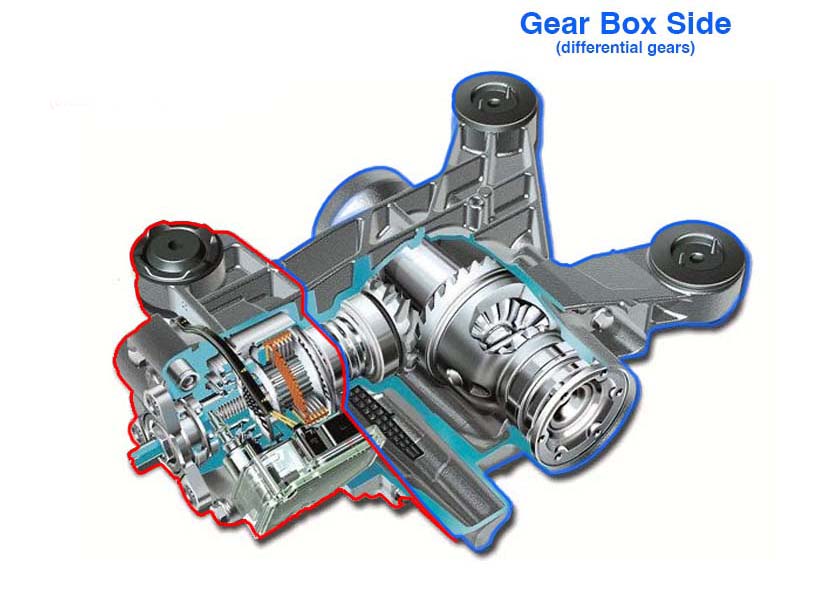
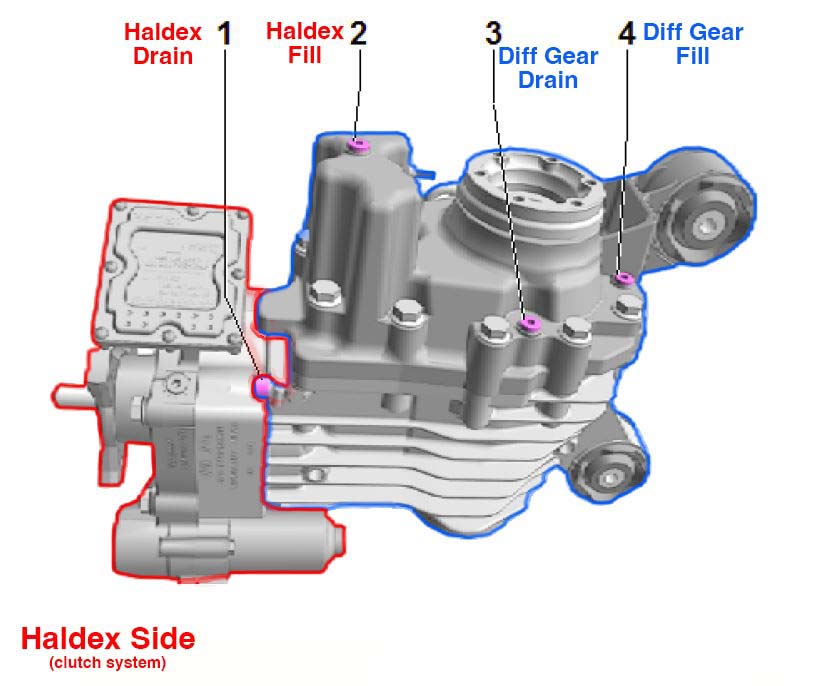 The rear assembly is essentially two components bolted together. First, you have the Haldex coupling itself, which is a wet multi-plate clutch pack controlled by an electronic pump. This requires a highly specialized, friction-modified hydraulic fluid to engage the clutches smoothly and transfer torque. Directly behind it sits the traditional mechanical rear differential, which uses heavy-duty gear oil (typically 75W-90) to lubricate the heavy metal ring and pinion gears that drive your axles.
These fluids do completely different jobs and must never be mixed. A notorious DIY mistake is draining the differential gear oil but accidentally topping off the Haldex chamber, leaving the mechanical gears bone-dry and the hydraulic clutches overfilled.
Why You Can’t Ignore Haldex Maintenance
In older generations of Haldex, the system used a replaceable paper filter. However, in Generations 4 and 5, they have eliminated the filter. Now, they use a small mesh screen attached to the electric pump.
As the clutch plates naturally wear down over time, they shed friction material directly into the Haldex fluid. This viscous, sludgy debris inevitably clogs the pump’s mesh screen. If neglected, the pump starves for fluid. I may burn out and your AWD system fails completely. This would leave you with a expensive repair bill. As a result, burnt-out pump or a fried Haldex control unit costs thousands of dollars. Conversely, a routine fluid service every 30,000 miles is cheap insurance.
Haldex Technology Beyond the Rear Differential
While most commonly associated with the rear axle, Haldex-style electro-hydraulic clutch technology is utilized elsewhere in European drivetrains to manage power.
-
Front Differentials (VAQ): Volkswagen integrated this exact technology into the front axles of their performance cars. The “VAQ” electronically controlled limited-slip differential uses a Haldex-style multi-plate clutch to physically lock the front wheels together during aggressive cornering, eliminating understeer. You will find this in the 2015+ Volkswagen Golf GTI (Performance Package) and the 2019+ VW Jetta GLI.
-
Transfer Cases / Bevel Gears: To send power to the rear Haldex unit, transverse-engine vehicles use a front transfer case (often called a bevel box or angle gear). While these generally use standard gear oil rather than Haldex fluid, they are the vital front half of the Haldex ecosystem. Notable examples include the 2003–2014 Volvo XC90, the 2006+ Audi A3 and TT (Quattro), and the 2015+ VW Golf R.
Wrapping it up
In conclusion, taking care of your Haldex system isn’t just about following the manual. It’s about protecting the performance and safety of your vehicle. Keep the fluid clean, and your Haldex will keep working for years to come.
For more information on how to get your Haldex in the shop for some service, maintenance or custom work, contact us at 425-254-0627. You can also schedule an appointment or receive a quote by clicking here. Meister Werks European & Import is located one block south from The Renton Landing in Renton, WA, across the street from the former Boeing Store and at the westside of the Paccar / Kenworth plant.
Meister Werks European & Import in Renton, the leader in European automotive maintenance, repair, and customization. Offering oil changes, Mercedes Service A, B, and C, brake flush, coolant flush, alignment, brakes, and more. Contact us today! At Meister Werks our goal is to be the best solution for our customers through exceptional service and quality workmanship. Our Warranty and Policies.